
The SC said every day, hundreds of dog bites were being reported in the city and on its outskirts, leading to rabies and ultimately, children and the aged were falling prey to the dreadful disease.

'The directives to enhance last-mile funding, consider revival funds, and systemic reforms across the sector are expected to revive stalled projects, improve accountability, and accelerate the delivery of affordable and mid-income housing.'

A woman is never free, bound as she is by so many expectations. And the one that can destroy her -- just as much as it can make her -- can be summed up in just one word. Mother.
The Supreme Court stated that in a continuing marriage, neither husband nor wife can claim independence from their partner, emphasizing that marriage signifies the union of two souls.

Reader Parag Desai and his family met the singer in the US.

The Supreme Court has expressed concerns over student suicides at IIT Kharagpur and Sharda University, directing expedited investigations into the incidents. The court questioned the institutions' handling of mental health issues and compliance with previous directives.
The Supreme Court has ordered the removal of all stray dogs from Delhi-NCR streets following concerns about rabies and dog bite incidents, particularly those involving children. The court criticized animal lovers and activists, questioning their ability to compensate for the loss of life due to rabies.

The 19-member National Syllabus and Teaching Learning Material Committee (NSTC) will be headed by National Institute of Educational Planning and Administration (NIEPA) chancellor MC Pant and develop textbooks for classes 3 to 12.
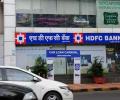
The Supreme Court on Friday refused to entertain a plea by HDFC Bank CEO and MD Sashidhar Jagdishan challenging an FIR of cheating and fraud registered against him on a complaint by the Lilavati Kirtilal Mehta Medical Trust, which runs the prominent Lilavati Hospital in Mumbai. A bench of Justices P S Narasimha and R Mahadevan noted that the matter was already listed for hearing on July 14 before the Bombay high court.

The Supreme Court has directed the Centre to explore providing insurance covers to defence cadets who suffer injuries or disabilities during training, emphasizing the need to support these 'braveheart cadets'.

The Supreme Court has directed the Delhi government and civic bodies to address the 'extremely grim' stray dog menace by picking up strays and housing them in shelters for sterilization and immunization. The court also warned against obstructing authorities and ordered the creation of a helpline for reporting dog bite cases.

The Supreme Court on Monday dismissed the pleas of telecom majors Vodafone, Airtel and Tata Teleservices seeking the waiver of adjusted gross revenue (AGR) dues. A bench comprising Justices J B Pardiwala and R Mahadevan called the pleas "misconceived".

Images from the IPL 2025 closing ceremony ahead of the final between RCB and Punjab Kings in Ahmedabad on Tuesday.

The Supreme Court of India has directed changes in digital know your customer (KYC) guidelines for persons with disability and acid attack survivors, citing the right to digital access as an intrinsic component of the right to life under Article 21 of the Constitution. The court found that existing KYC procedures, which require visual tasks such as head movements and facial positioning, pose significant challenges for these groups, preventing them from accessing essential services like bank accounts and welfare schemes. The court emphasized the importance of bridging the digital divide and ensuring universal accessibility to digital services for all citizens.

A two-judge bench of the top court had on August 11 directed authorities in Delhi-National Capital Region (NCR) to start picking up stray dogs from all localities "at the earliest" and relocate the animals to dog shelters.

The Supreme Court has directed authorities in Delhi-NCR to relocate stray dogs to shelters, emphasizing public safety and addressing concerns about dog bites, particularly among vulnerable populations.

Reader Sumedh Acharekar has sent us a photograph.
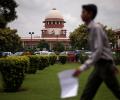
The Supreme Court has deleted its critical observation against Allahabad High Court judge Prashant Kumar, clarifying that it did not intend to embarrass or cast aspersions on him. The decision follows a request from Chief Justice B R Gavai to reconsider the matter.

Anurag Kashyap has expressed his frustration over the release issues faced by Ananth Mahadevan's biographical drama Phule.

The Supreme Court's order to remove stray dogs from Delhi-NCR localities has sparked mixed reactions, with RWAs welcoming the move and animal rights activists raising concerns about implementation and potential harm.

'Day by day we expose how soulless we have become as a society. Every day is a disappointment.'

It this era of sensationalism, we should appreciate director Anant Mahadevan for treating Phule with calm and composure and not going overboard, notes Hemant Waje.
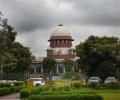
A five-judge Constitution bench of the Supreme Court is scheduled to consider the Presidential reference on whether timelines could be imposed by judicial orders for the exercise of discretion by the President while dealing with bills passed by state assemblies.

Reader Ravindra Kshirsagar sends us a photograph.
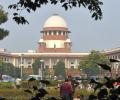
A Constitution bench comprising Chief Justice B R Gavai and Justices Surya Kant, Vikram Nath, P S Narasimha and A S Chandurkar, would fix the timelines on July 29 and commence hearing on the presidential reference in mid-August.
The Supreme Court of India has ruled that courts have the authority to determine the appropriate interest rate in cases involving share valuation, considering the specific facts of each case. The decision came in a 52-year-old legal battle between private parties and the Rajasthan government over the valuation of shares transferred to the state government. The court also modified the interest rate applicable to delayed payments, awarding 6 percent per annum simple interest from July 8, 1975, until the date of decree, and 9 percent per annum simple interest from the date of decree until realization of the payment.


'We should support cinema that's rooted in our culture and not ape the West.'

Joginder Tuteja looks at the month's releases in theatres.
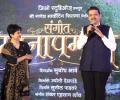
'It pains me when Marathi film-makers come to me and say that Marathi cinema is not getting the right platform.'
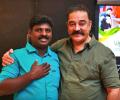
'When Kamal Haasan came into the room, I was literally shivering. I am just an ordinary head load worker and there, I was standing next to a legend like him. I didn't know what to do. Not even in my dreams did I think of meeting Kamal sir or talking to Shankar Mahadevan sir. I was living a dream.'
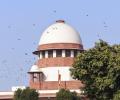
Justices N Kotiswar Singh and R Mahadevan were on Tuesday elevated as judges of the Supreme Court.
The Supreme Court of India has reprimanded the Rajasthan government over the alarming rise in student suicides in Kota. The court expressed its deep concern over the situation, questioning the state's efforts to address the crisis. The court also ordered an FIR to be filed in the case of a 22-year-old IIT Kharagpur student who died by suicide in his hostel room, citing a delay in reporting the incident to the police.

'Casting the Bachchans NOT as father and son was the toughest and the easiest part.'

Shankar Mahadevan, who suffered heart attack, is back home and doing fine.

The Supreme Court of India has directed its registry to call for a report from IIT Kharagpur and Kota, Rajasthan, after the suicides of a student and a NEET aspirant came to light. The court is seeking to ascertain whether FIRs were registered in both cases, highlighting the disturbing pattern of student suicides in educational institutions. The court has also previously ordered the formation of a national task force to address mental health concerns and prevent suicides in higher educational institutions.
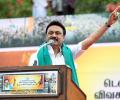
Tamil Nadu Chief Minister M K Stalin has welcomed the Supreme Court's ruling that state governors must give assent to bills passed by state assemblies, calling it a 'historic' victory for all state governments in India. The court's decision came after the Governor of Tamil Nadu, R N Ravi, withheld assent to several bills passed by the state legislature. The court found that the governor's actions were in violation of the Indian Constitution, which mandates that governors must act on the advice of the council of ministers. The ruling is seen as a significant step towards strengthening the federal structure of India.

rediffGURUS Dr Chandrakant Lahariya, Komal Jethmalani, Dr Karthiyayini Mahadevan and Pushpa R will answer your diabetes-related questions.

Reader Aditi Chaudhuri sent us a photograph.

Tamil Nadu Governor R N Ravi has sparked controversy by asking students at a government-aided college in Madurai to chant "Jai Shri Ram". The State Platform for Common School System-Tamil Nadu (SPCSS-TN) has demanded his removal, alleging that he violated his oath of office and secular principles. The group claims Ravi's actions were against the Constitution, which outlines India as a secular country and emphasizes the importance of upholding secular values in education. The incident follows a recent Supreme Court ruling that overruled Ravi's decision to withhold 10 Bills passed by the Tamil Nadu government, highlighting ongoing tensions between the Governor and the state administration.
